
 Prenatal & Postpartum Yoga
Pelvic Girdle Pain in Pregnancy: Understanding Pubic Pain and Easing It With Prenatal Yoga
Getting out of the car, climbing a few stairs, putting on trousers: as pregnancy progresses, these everyday movements can suddenly become painful, sometimes even difficult. A dull or sharp pain settles at the front of the pelvis, sometimes paired with a feeling of instability.
This pain has a name: pelvic girdle pain, also known as symphysis pubis dysfunction (SPD) or pregnancy pubic pain. It affects many pregnant women, especially from the second trimester onward, and yet it's rarely explained clearly.
This article looks at what's actually happening in your pelvis during pregnancy, how to recognise the symptoms, and above all which movements and postures can help ease the pain day to day, without making it worse.
I. What Is Pelvic Girdle Pain in Pregnancy?
At the front of the pelvis, two bones meet at a small cartilaginous joint: the pubic symphysis. Outside of pregnancy, this joint stays almost still. It helps stabilise the pelvis with every step you take.
During pregnancy, your body releases a hormone called relaxin. Its role is to gradually soften the ligaments of the pelvis to prepare for the baby's passage during birth. This is a useful, necessary adaptation. But in some women, this softening makes the pubic symphysis more mobile than it should be at this stage, and that instability creates pain.
This is called symphysis pubis dysfunction, or more broadly pelvic girdle pain when the discomfort also reaches the back of the pelvis, around the sacrum. Symptoms most often appear in the second trimester and can intensify through the third, as the baby's weight and the range of motion in the pelvis both increase.
II. Recognising the Symptoms Day to Day
The pain usually sits around the pubic bone, sometimes in the groin or perineum. It can radiate toward the hips or inner thighs. Some women describe a feeling of an unstable pelvis, or even a slight clicking sensation with certain movements.
It tends to show up in specific situations:
- while walking, especially over longer distances;
- on stairs;
- when getting out of the car;
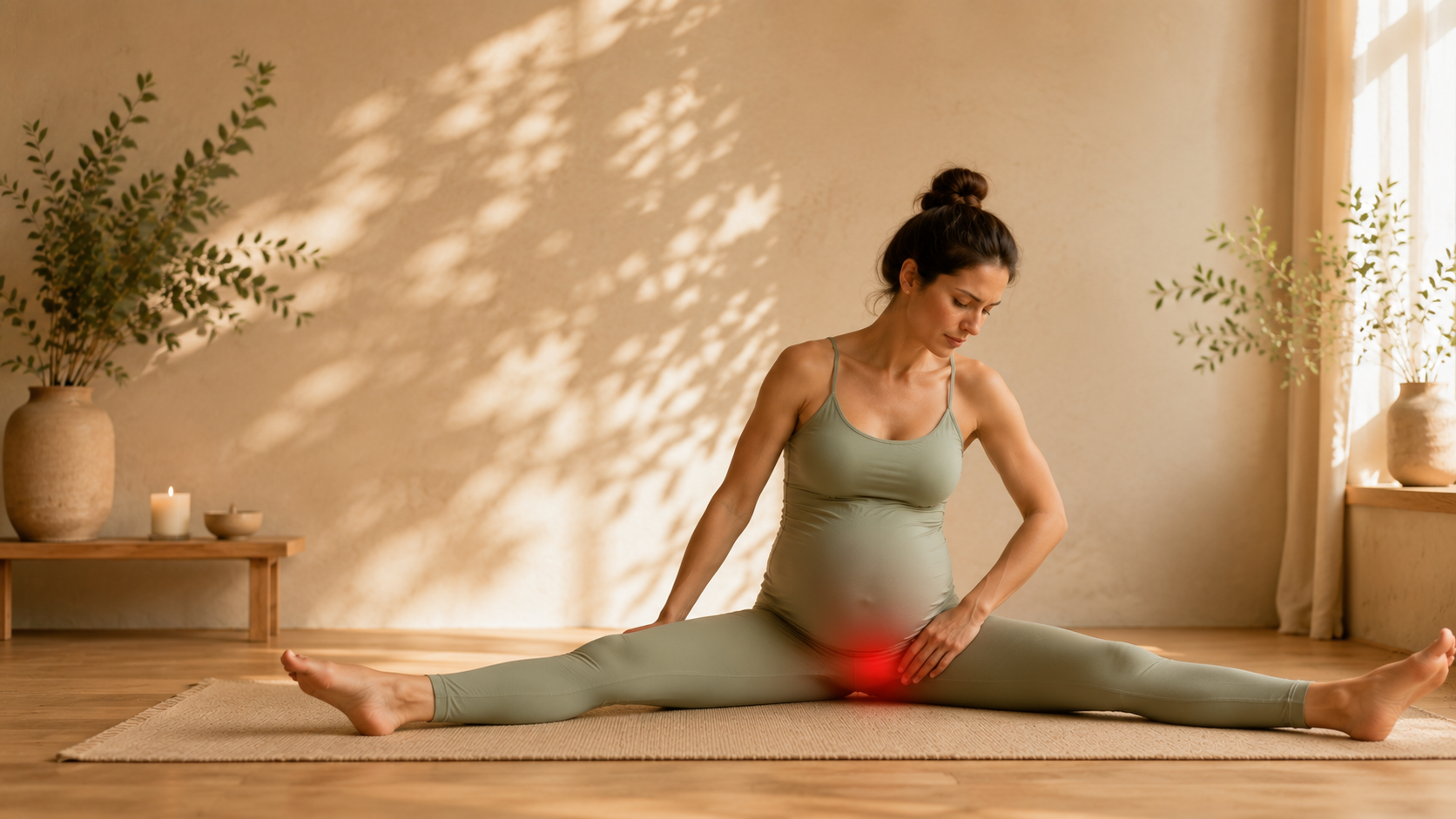
- when spreading your legs apart, for example to get dressed or step into a bathtub.
This last difficulty, a limited ability to spread the legs, is often the most telling sign of pelvic girdle pain in pregnancy.
What Can Make This Pain More Likely
A few factors seem to raise the risk of developing pelvic girdle pain during pregnancy: natural ligament laxity, rapid weight gain, lower back or pelvic pain that was already present before pregnancy, or closely spaced pregnancies. A very sedentary lifestyle, or on the other end, intense physical activity that isn't well adapted, along with fatigue and posture that shifts over the months, can also play a part.
None of this is inevitable. It mostly helps explain why this pain affects some pregnancies more than others, and why it deserves to be taken seriously rather than dismissed as one of the minor discomforts of pregnancy.
III. Postures and a Session to Support the Pelvis
With an unstable pubic symphysis, the first instinct is sometimes to stop moving altogether. That's not the right approach: the real issue is spreading the legs apart or rotating the hips outward, not movement itself. Continuing to gently mobilise your pelvis, without ever forcing the legs apart, stays beneficial throughout pregnancy.
That's exactly the idea behind the video Le Pont de la confiance ("The Bridge of Trust"): a thirteen-minute session that strengthens the centre of the body and works the deep abdominals without ever calling on the legs to spread apart or the hips to open. A simple way to keep moving and mobilising your pelvis, without risking making the pubic pain worse.
If you'd like to build on that, here are three postures that follow the same principle:
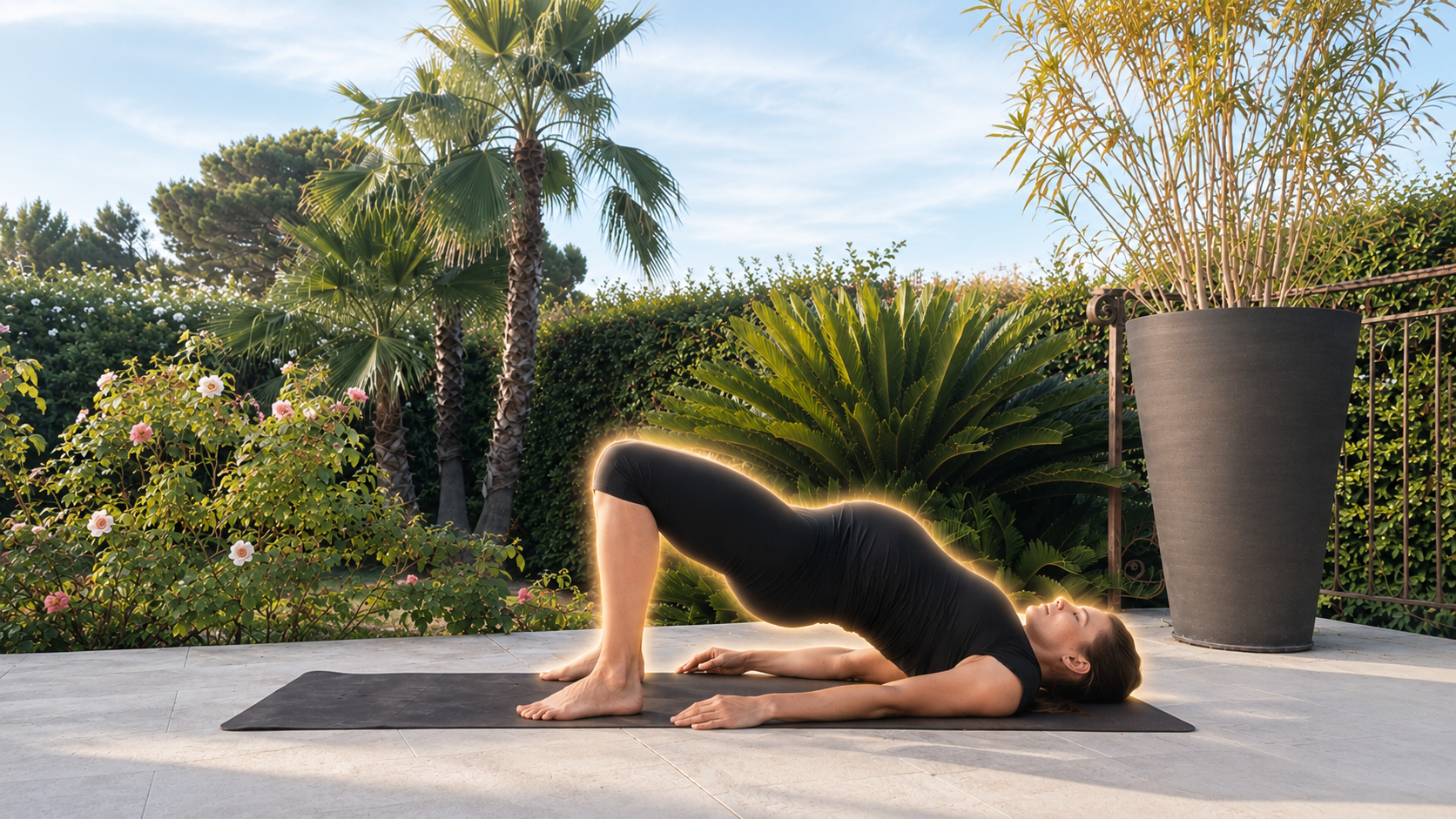
The Bridge of Confidence 🌉
Cat-Cow Pose (Marjaryasana-Bitilasana)
On all fours, with your knees under your hips and your hands under your shoulders, let your pelvis tilt gently forward and back, moving with your breath. The spine rounds on the exhale and softly arches on the inhale.
This gentle rocking mobilises the pubic symphysis without putting it under strain, while warming up the whole spine. It's often one of the best-tolerated movements when pubic pain is present.
Bridge Pose (Setu Bandha Sarvangasana)
Lying on your back, feet flat, knees bent and aligned with your hips, hip-width apart. On an exhale, lift your pelvis gently a few centimetres, keeping your knees parallel, without letting them fall open or drift together.
This moderate version activates the glutes and lower back muscles, the very support that helps stabilise an unstable pelvis, without ever calling on the legs to spread apart.
Legs Up the Wall (Viparita Karani)
At the end of the day, when your pelvis is tired from carrying the weight of your body, this posture offers a real moment of rest. Lying on your back, your legs rest vertically against a wall, next to each other.
It eases the feeling of heaviness in the pelvis and legs, supports venous return, and lets you rest without any strain on the pubic symphysis.
IV. Small Habits That Change Your Daily Life
Beyond the yoga mat, it's often small adjustments in daily movements that bring the most relief.
To get up from bed or out of the car, keep your knees pressed together and turn your pelvis as one block, all in one piece: this simple habit limits strain on the symphysis. On stairs, take one step at a time rather than skipping two, which noticeably reduces the discomfort.
At night, place a pillow between your knees when you sleep on your side. It helps keep the pelvis aligned and stops one leg from pulling on the other while you sleep. A pelvic support belt, worn under the belly, can also bring back a sense of stability during the day, especially during activities that involve standing for long stretches.
Footwear matters too. Flat, stable shoes limit the pelvis tipping with every step, unlike heels, which tend to tip it forward.
Finally, try to avoid asymmetrical movements and sudden changes of position, like twisting quickly to one side to grab something. Taking your time to move, one step at a time, often makes all the difference.
V. What's Worth Setting Aside for Now, and When to Seek Help
1. Movements to Set Aside While the Pelvis Stabilises
Some postures call heavily on spreading the legs or rotating the hips outward, which can increase pubic pain. This includes Butterfly Pose (Baddha Konasana), Garland Pose (Malasana), Goddess Pose (Utkata Konasana) and Pigeon Pose (Eka Pada Rajakapotasana).
Deep splits, deep lunges and standing on one leg for long stretches are also worth pausing for now. None of this is permanent: these postures will find their place in your practice again once the pelvis has stabilised, after the birth.
2. When to Seek Help
If the pain becomes intense enough to make walking difficult, if it comes with radiating sensations or numbness in the legs, or if it's seriously affecting your sleep or your mood, it's worth reaching out for support. A midwife, a pelvic floor physiotherapist or an osteopath trained in pregnancy care can offer suitable solutions: rehabilitation, a custom-fitted pelvic belt, gentle manual techniques.
One thing is worth knowing: pelvic girdle pain doesn't prevent a vaginal birth. It simply means letting your care team know in advance, so that positions during labour can be adapted and postures that put too much strain on the pelvis can be avoided.
VI. Conclusion
Pelvic girdle pain in pregnancy comes down to a specific mechanism: a pubic symphysis made more mobile by relaxin, temporarily losing some of its stability. Understanding this mechanism already helps you live with the pain more easily, knowing it's neither dangerous for your baby nor permanent.
By adjusting a few daily habits and choosing movements that mobilise the pelvis without ever forcing the legs apart, you can keep moving, keep building strength, and keep feeling good in your body, all the way to the end of pregnancy.