
 Prenatal & Postpartum Yoga
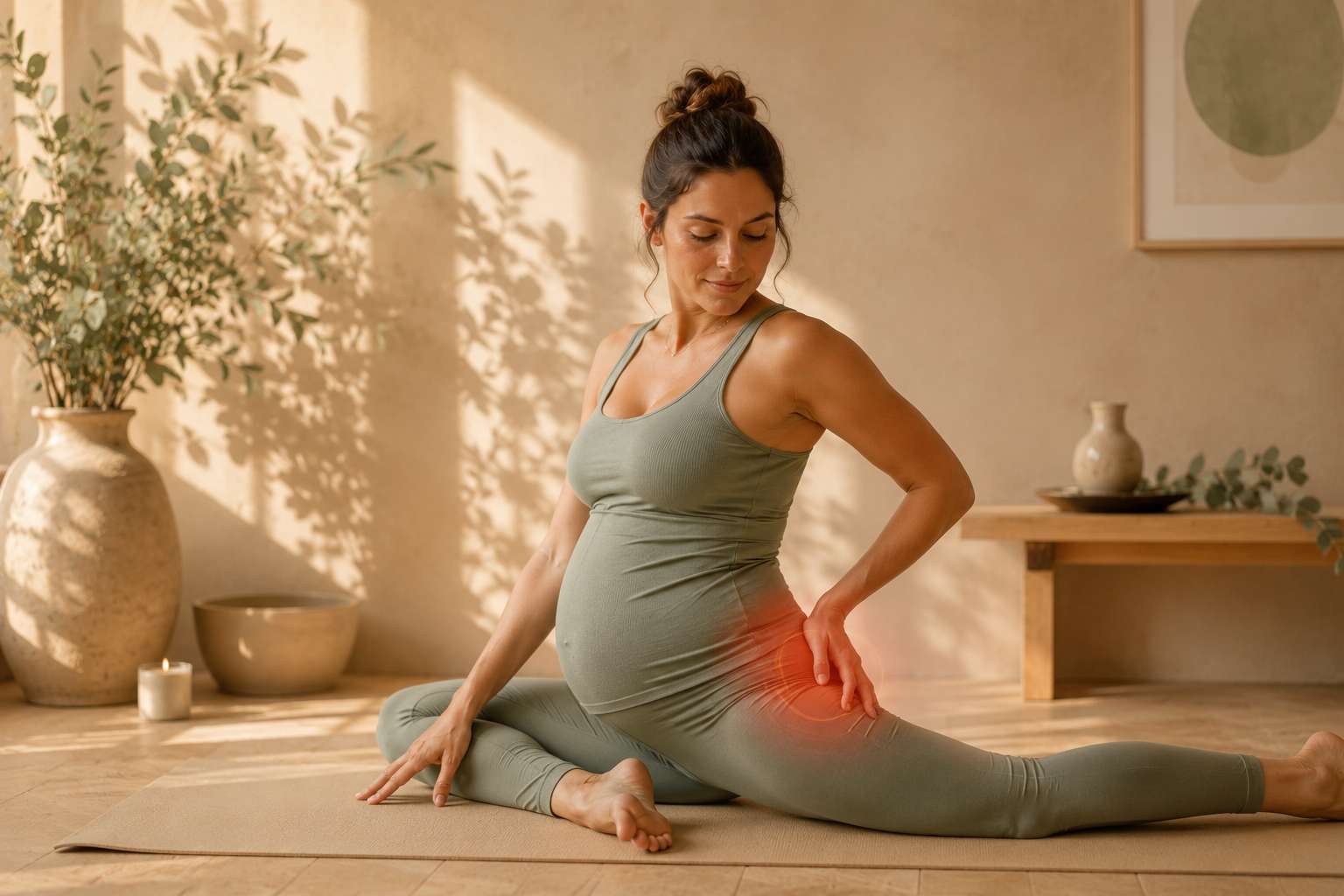
Sciatica or Piriformis Syndrome During Pregnancy?
Sciatica or Piriformis Syndrome During Pregnancy?
Pain in the buttock, a sensation running down the leg, discomfort when walking or changing position in bed.
During pregnancy, many women think they are experiencing sciatica. However, the sciatic nerve is not always the cause.
Piriformis syndrome, which is common during pregnancy, often causes very similar symptoms.
So how can you tell the difference?
I. Why are these pains common during pregnancy?
As the months go by, the pelvis adapts to the baby's growth.
The center of gravity shifts forward, the gluteal muscles work harder, and pregnancy hormones make certain joints more mobile.
These changes can create tension around the pelvis and lead to pain that feels like sciatica.
II. Sciatica or piriformis syndrome?
Sciatica
The pain often starts in the lower back and travels into the buttock and leg.
It may be accompanied by:
- burning sensations;
- tingling;
- numbness.
Piriformis syndrome
The piriformis is a small muscle located deep within the buttock.
When it becomes overly tight, it can cause symptoms that closely resemble sciatica.
During pregnancy, this is common because the gluteal muscles often compensate for changes in pelvic alignment and balance.
III. Yoga poses that may help
Sleeping Pigeon Pose (Kapotasana II)
This pose helps release deep tension in the hips and gluteal muscles.
Butterfly Pose (Baddha Konasana)
A gentle hip opener that promotes mobility in the pelvis.
Child's Pose (Balasana)
A restorative posture that helps relax the back and slow the breath.
Legs Up the Wall Pose (Viparita Karani)
Particularly soothing when the legs feel heavy or tired.
IV. A gentle practice to release pelvic tension
Gentle movement and conscious breathing are often the most beneficial approaches when discomfort is related to the physical adaptations of pregnancy.
V. When should you seek medical advice?
Consider consulting a healthcare professional if:
- the pain becomes very intense;
- it significantly disrupts your sleep;
- you notice weakness in the leg;
- numbness develops.
VI. Conclusion
During pregnancy, not every pain that travels down the leg is true sciatica.
Piriformis syndrome and tension caused by the body's adaptations to pregnancy are often involved.
Understanding the difference can help you adapt your practice more effectively and find greater comfort throughout your pregnancy.