
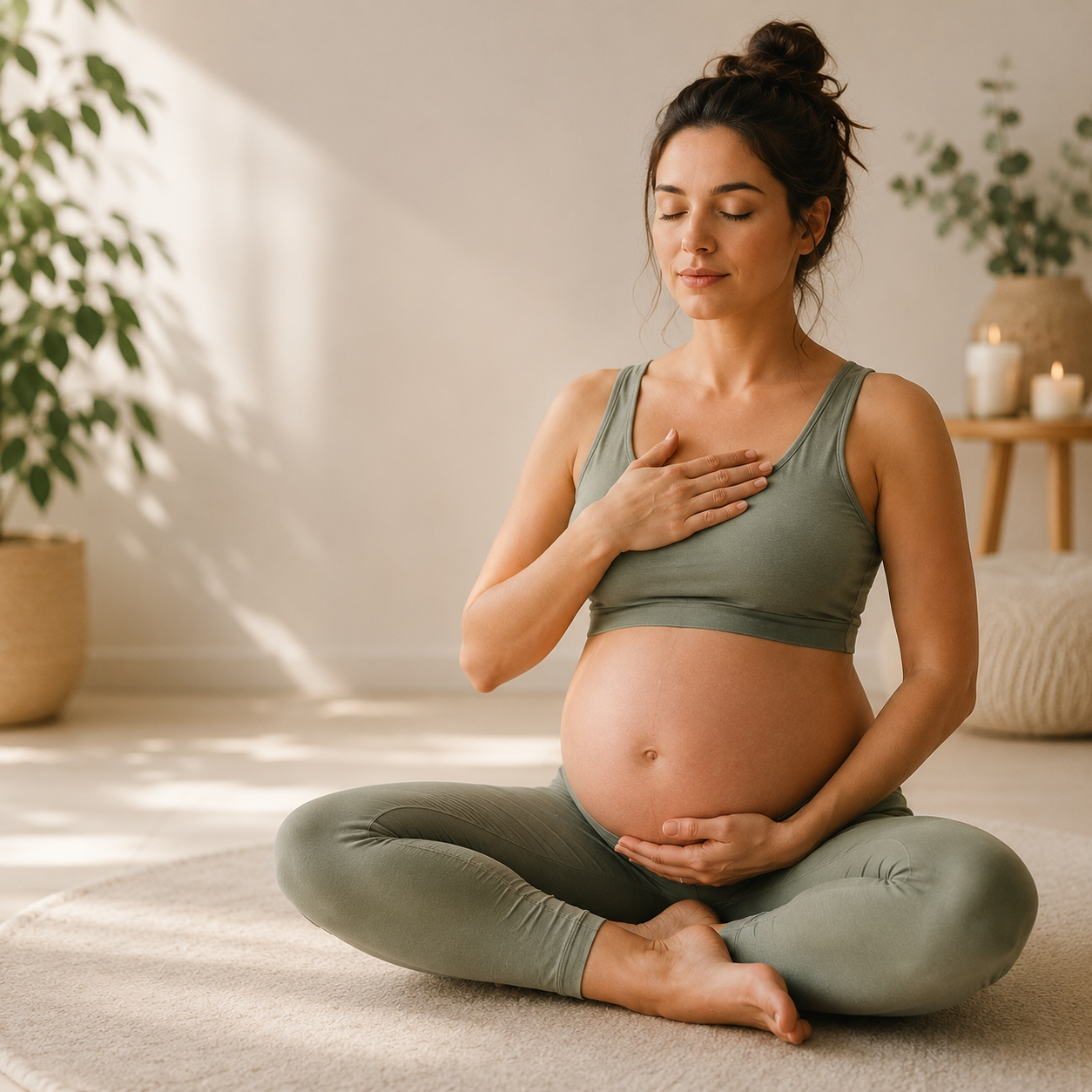
 Prenatal & Postpartum Yoga
Breathing and Pregnancy: The Principles of the De Gasquet Method
Breathing is one of the most valuable tools during pregnancy. It supports the body's transformations, promotes relaxation, improves mobility, and gradually prepares for childbirth.
The De Gasquet method offers a particularly well-suited approach for this period. Rooted in biomechanics, respect for the pelvic floor, and physiological breathing, it helps manage the pressures placed on the body throughout pregnancy.
I. The Three Core Principles of the De Gasquet Method
1. Pelvic Placement
As pregnancy progresses, the weight of the belly gradually shifts the body's balance. It becomes common to exaggerate the lumbar curve, project the belly forward, or collapse in the upper back.
The De Gasquet method invites a placement that respects the natural curves of the spine while minimising unnecessary pressure on the pelvic floor and abdominal muscles.
The goal is not to pull the belly in or contract the muscles, but to find a stable, comfortable posture that is favourable to breathing.
2. Self-Elongation
The second pillar is self-elongation.
It consists of creating space in the body by lengthening the spine, as if the crown of the head were gently drawn upward while the shoulders move away from the pelvis.
This sense of lengthening prevents compression, improves breathing, and promotes a better distribution of pressure throughout the body.
3. Physiological Breathing
It is often said that one should breathe by expanding the belly. However, during pregnancy, this instruction is not always the most appropriate.
The De Gasquet method favours costo-diaphragmatic breathing. On the inhale, the ribs open laterally and into the back, while the belly remains supple and free in its natural movement. On the exhale, the ribs gradually close and the diaphragm rises.
This breathing pattern allows full use of the body's respiratory capacity while limiting downward pressure.
II. The Pelvic Floor: A Partner in Breathing
The pelvic floor works in synergy with the diaphragm and naturally follows the rhythm of breathing.
On the inhale, it softens and accompanies the descent of the diaphragm. On the exhale, it naturally rises with it.
The goal is not to strongly contract the pelvic floor, but to develop awareness of this natural movement of descent and return. This coordination helps preserve the balance of the pelvic floor throughout pregnancy.
III. Starting with the Exhale
Another fundamental principle of the De Gasquet method is using the exhale to accompany effort.
The exhale promotes the natural activation of the transversus abdominis — the deepest abdominal muscle — as well as the reflex return of the diaphragm and pelvic floor.
Rather than pulling the belly in or voluntarily contracting the pelvic floor, the breath is allowed to naturally organise the body.
In prenatal yoga, it is often helpful to exhale when entering a posture, rising, or changing position. Movement becomes more stable and more respectful of the pelvic floor.
IV. Synchronising Breath and Movement
In prenatal yoga, breathing accompanies every movement.
The inhale generally supports movements of opening and lengthening. The exhale accompanies movements that require stability or muscular engagement.
This coordination improves the fluidity of movement, reduces unnecessary tension, and develops greater awareness of the diaphragm, deep abdominal muscles, and pelvic floor.
V. Preparing for Childbirth
Beyond yoga, this way of breathing constitutes genuine preparation for childbirth.
It helps manage effort, intense sensations, and contractions more effectively, while encouraging release when needed.
A few minutes of regular practice is enough to begin feeling the benefits.
VI. Conclusion
The De Gasquet method rests on three fundamental principles: pelvic placement, self-elongation, and physiological breathing.
During pregnancy, it invites a preference for opening the ribs rather than voluntarily expanding the belly, honouring the natural synergy between diaphragm and pelvic floor, and letting the breath guide movement.
A simple, gentle, and deeply body-respecting approach to support pregnancy and prepare calmly for birth.